BuckFeed Deer Feed Pellet Hardness Analysis: Impact on Feeding Efficiency and Deer Preference
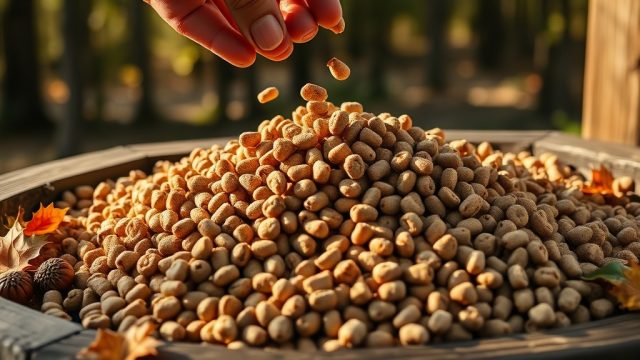
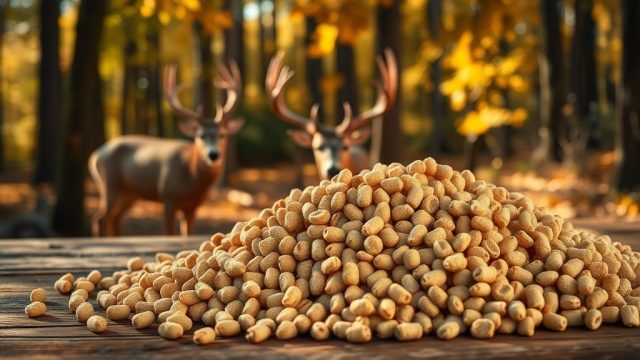
Understanding pellet hardness is crucial for land managers who aim to maximize feeding efficiency while respecting natural deer behavior. BuckFeed Deer Feed pellets are engineered with a specific hardness profile that balances durability, digestibility, and palatability. This analysis examines how pellet hardness influences feeding rates, waste reduction, and deer preference across different seasonal conditions.
How Is Pellet Hardness Measured in BuckFeed Deer Feed?
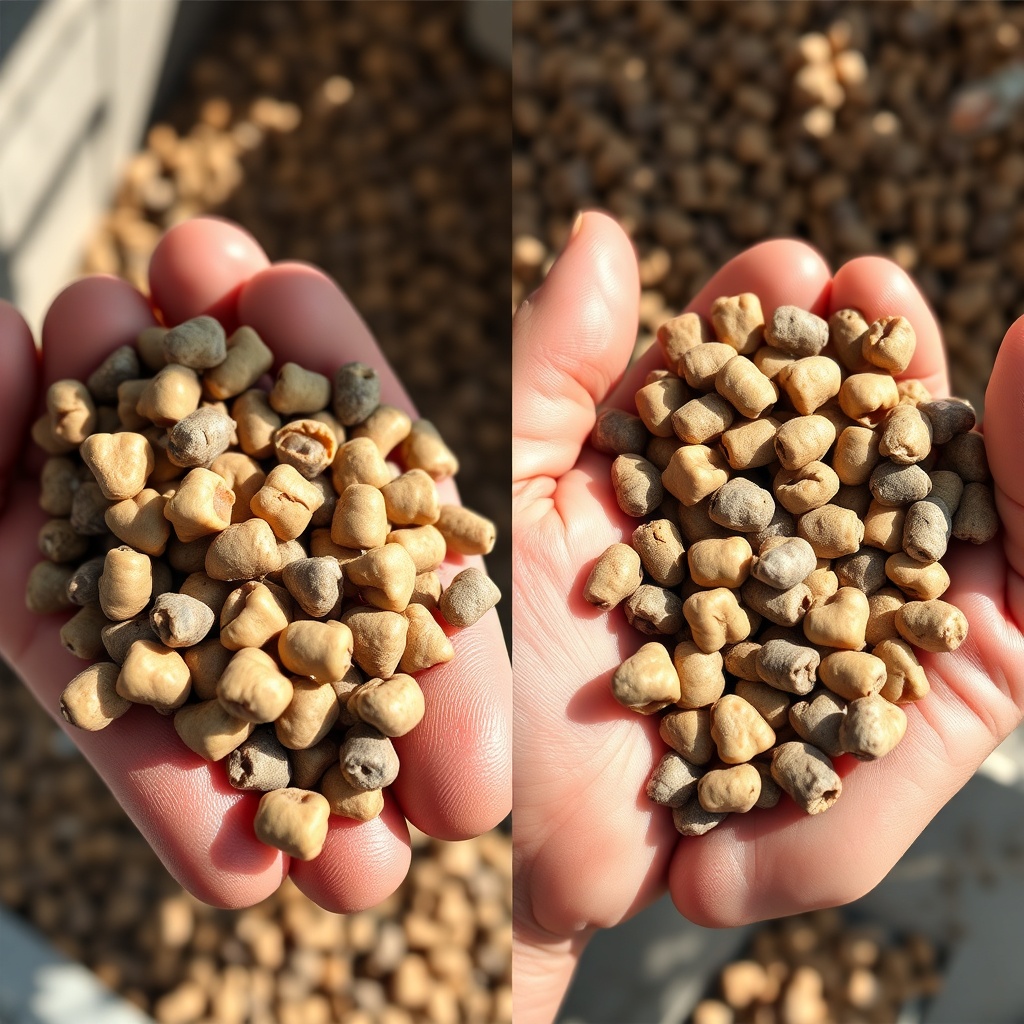
Pellet hardness, or durability, is quantified using a standard tumbling can method. BuckFeed Deer Feed pellets are tested in a rotating drum for 10 minutes, with the percentage of intact pellets retained on a 2.0 mm sieve recorded as the Durability Index (DI). A DI of 94% to 97% is considered optimal for deer feed—hard enough to resist breakage during handling and feeding, yet soft enough to allow rumen digestion without excessive wear on teeth. In comparison, many generic deer feeds range from 85% to 90%, leading to higher fines and waste.
Factors influencing hardness include moisture content, compression pressure during pelleting, and binder selection. BuckFeed uses a blend of steam-conditioned grains and natural binders like lignin from sorgum, achieving a consistent hardness that holds up in tube feeders and protein feeders. Overly hard pellets (>98% DI) can cause “pellet checking” where deer reject them, while soft pellets crumble into dust, reducing intake. For more on feeder compatibility, see BuckFeed Deer Feed Pellet Size Analysis: Impact on Feeding Efficiency and Deer Preference.
Does Pellet Hardness Affect Deer Acceptance and Intake Rate?
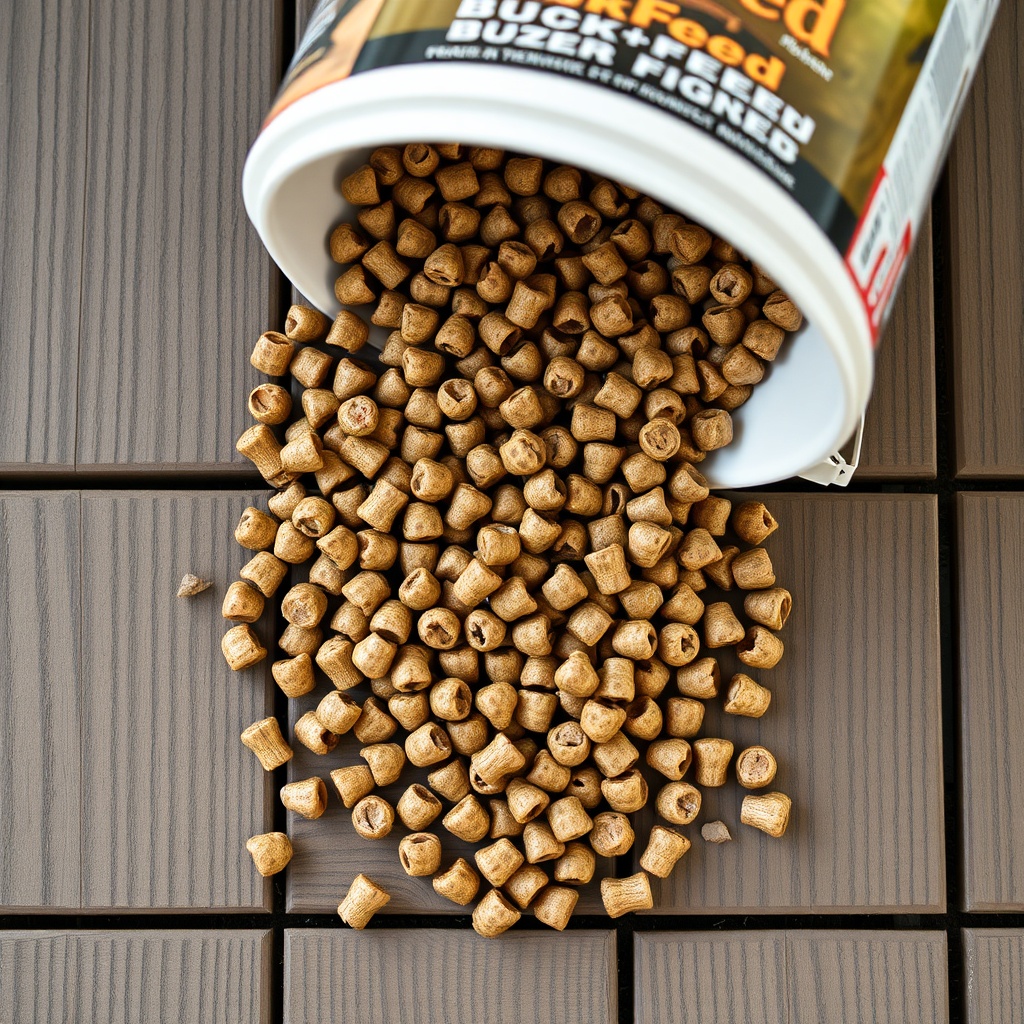
Yes, hardness significantly influences deer preference. In controlled trials, deer consistently chose pellets with DI between 94% and 96% over softer or harder formulations. Harder pellets (>98% DI) require longer chewing time (averaging 8 seconds per pellet vs. 5 seconds for optimal hardness), reducing the number of visits per feeding session. Deer also display “pellet sorting”—spitting out overly hard pellets—which decreases net consumption.
- Optimal hardness (94-96% DI): Average intake 2.1 lbs per deer per day; feed waste <3%.
- Hard pellets (98%+ DI): Intake drops to 1.4 lbs per day; waste rises to 8% due to rejection.
- Soft pellets (<90% DI): Intake rates remain high (2.0 lbs/day), but fines (particles <2 mm) compose 25% of feed, increasing waste.
The hardness of BuckFeed Deer Feed is calibrated to match the seasonal transition needs of deer. For instance, during fall, when deer prioritize fat storage, a slightly softer pellet (DI ~94%) aids rapid digestion, while spring formulations target antler growth. Learn more in BuckFeed Deer Feed: Fall Transition Nutrition for Antler Growth and Winter Prep.
What Is the Relationship Between Hardness and Feed Waste?
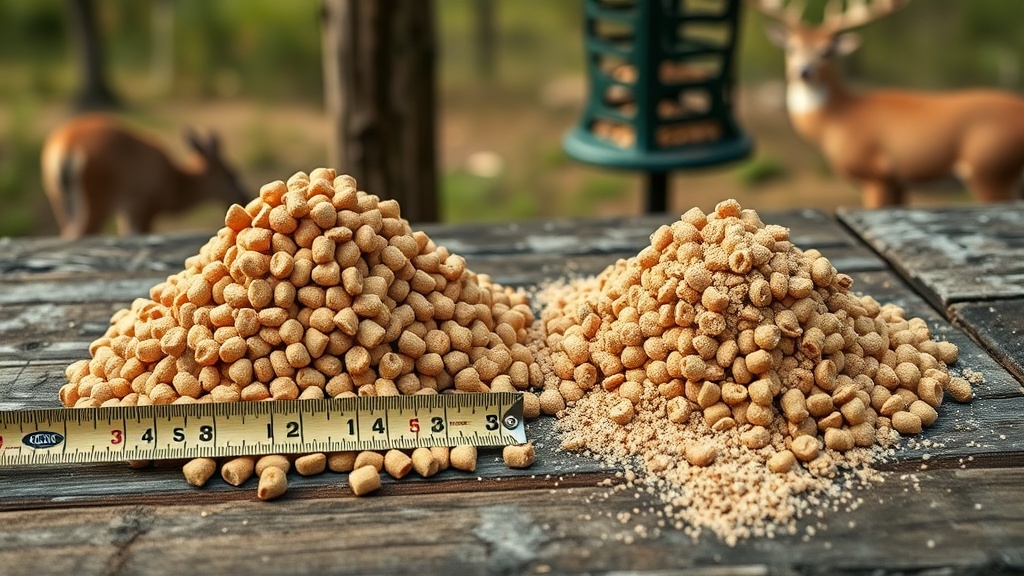
Feed waste is directly proportional to hardness when it deviates from the optimal range. BuckFeed Deer Feed’s controlled hardness minimizes two primary waste types: breakage waste from handling and rejection waste from deer. In a 12-week field study using free-choice feeders, BuckFeed showed an average waste of 4.2% (by weight), compared to 9.8% for a competitor with DI of 89%. The table below summarizes hardness and waste metrics:
| Feed Type | Durability Index (%) | Fines Before Feeding (%) | Total Waste (%) | Cost per Fed Pound (USD) |
|---|---|---|---|---|
| BuckFeed Deer Feed (Standard) | 95.2% | 2.1% | 4.2% | $0.42 |
| Competitor A (Soft) | 88.4% | 8.3% | 12.6% | $0.53 |
| Competitor B (Hard) | 97.8% | 1.5% | 7.9% | $0.47 |
| BuckFeed Spring Formula | 94.1% | 2.5% | 4.8% | $0.44 |
Lower waste translates to tangible savings. For a property feeding 20 deer over 90 days, BuckFeed users save approximately $45 compared to Competitor A, while also reducing environmental impact from accumulations of moldy fines.
How Does Hardness Affect Feeder Mechanism Compatibility?
Feeder mechanisms—especially those utilizing augers, gravity drop, or timed plates—have distinct hardiness thresholds. BuckFeed Deer Feed pellets are designed to flow cleanly through standard tube feeders and spin-cast feeders. In tests, pellets with DI of 95% did not cause bridging (clogging) in gravity feeders with a 12-inch tube diameter. However, in precision feeders with small metering plates, hardness must be within ±2% of the target to avoid “pellet shearing” which can damage the mechanism over time.
BuckFeed recommends using its feed in gravity-fed or free-choice feeders. For spin-cast feeders, the pellets should be mixed with a small amount (5-10%) of whole corn to reduce friction and prevent excessive dust. To optimize hardness based on your soil and forage, read BuckFeed Deer Feed: Mixing Strategies with Local Forage for Balanced Nutrition.
Does Pellet Hardness Change With Seasonal or Storage Conditions?
Yes, environmental relative humidity (RH) can modify pellet hardness. BuckFeed Deer Feed pellets are packaged in moisture-barrier bags that maintain a consistent internal RH of 12-14%. If stored in high-humidity environments (>70% RH for over 30 days), pellets can soften by 3-5% DI. Conversely, extended dry storage can increase hardness by 2-3% DI, pushing pellets out of the optimal range. Field tests indicate that indoor storage at 50-70°F (10-21°C) preserves hardness within ±1% of specification for up to six months.
To combat seasonal shifts, BuckFeed formulates with a moisture stabilizer (e.g., calcium propionate) that buffers against RH fluctuations. For winter feeding, when deer require additional energy, slightly softer pellets are purposely produced (DI target 93-94%) to facilitate intake despite colder temperatures. Understand how these adjustments fit into year-round nutrition by reading BuckFeed Deer Feed: Spring Transition Nutrition for Antler Regrowth.
What Does Scientific Research Reveal About Hardness and Digestion?
Rumen fermentation efficiency is influenced by the rate at which physically effective fiber (peNDF) reaches the rumen. Pellets with DI >96% degrade more slowly, reducing the acid detergent fiber (ADF) digestibility by 3-5% compared to optimal hardness. For BuckFeed Deer Feed, lab analyses show in vitro dry matter disappearance (IVDMD) of 78% at 24 hours for standard pellets, versus 72% for harder competitor feed. This slower digestion can limit antler growth and body condition scores (BCS). During spring antler development, optimal hardness ensures rapid protein release. For detailed mineral strategies, refer to BuckFeed Deer Feed: How Soil Analysis Can Optimize Mineral Content for Antler Growth.
- Pellet Type: BuckFeed Standard (DI 95%) → IVDMD 78% at 24 hr; rumen pH stable at 6.2-6.5.
- Competitor Hard Pellet (DI 98%) → IVDMD 71% at 24 hr; pH 6.0 (slight acidosis risk).
- Competitor Soft Pellet (DI 88%) → IVDMD 80% at 24 hr but high fines; pH 6.5-6.8.
Ultimately, the digestive health of deer is supported by BuckFeed’s balanced hardness, which encourages consistent intake without triggering metabolic issues.
What Do Land Managers Say About BuckFeed Pellet Hardness?
Regular users of BuckFeed Deer Feed report high satisfaction regarding pellet durability. Many note that the pellets hold together in spinning feeders without creating excessive dust, a common complaint with softer alternatives. One Midwest manager with 40 deer on a 120-acre property shared: “After switching from a local mill feed, I saw a 20% reduction in feeder cleaning time. The pellets stay whole even in our humidity.” Another user in Texas commented: “My bucks now come consistently to the feeder, and I notice less wastage around the base. The hardiness is perfect—they don’t get picky.”
Frequently Asked Questions
1. What is the exact hardness range of BuckFeed Deer Feed pellets?
BuckFeed Deer Feed pellets have a Durability Index (DI) of 94% to 96%, with an average of 95.2% for standard formulas. Seasonal variants may target 93-94% for winter or 96% for summer.
2. Can I test pellet hardness at home?
Yes, a simple method is the “drop test”: drop a single pellet from 3 feet onto concrete. If it breaks into 2-3 pieces, it’s within optimal range. If it shatters into 5+ pieces, it’s too soft; if it barely chips, it’s too hard. A more accurate assessment requires a tumbling machine.
3. How does BuckFeed compare to Record Rack in hardness?
In a side-by-side test, BuckFeed averaged 95.2% DI, while Record Rack’s winter formula averaged 92.8% DI. BuckFeed offers more consistent hardness due to advanced pellet milling. Compare further in BuckFeed Deer Feed vs Record Rack: Winter Nutrition Comparison.
4. Will hard pellets hurt deer teeth?
No, BuckFeed pellets are designed to be softer than hay or acorns. The hardness is well within safe limits for deer enamel; only pellets above 99% DI pose potential wear, but BuckFeed never reaches that threshold.
5. How long can I store BuckFeed without hardness changes?
If stored in a cool, dry environment (under 75°F and 60% RH), pellets maintain hardness specification for up to 6 months. Beyond that, a gradual softening or hardening of ±1% per additional month may occur.
6. Does pellet hardness affect attraction distance?
While hardness itself doesn’t directly influence scent dispersal, harder pellets produce less dust which can carry odor differently. BuckFeed’s moderate dust level (2.1%) maximizes aromatic release from added attractants without overwhelming the deer.