BuckFeed Deer Feed vs Record Rack: Winter Nutrition Comparison
Winter is a critical period for deer survival and future antler development. Selecting the right supplemental feed can mean the difference between maintaining body condition and suffering nutritional stress. This exclusive comparison examines two leading brands—BuckFeed Deer Feed and Record Rack—focusing on winter-specific nutrition, cost per pound, ingredient quality, and palatability under cold conditions.
What Makes Winter Deer Nutrition Different From Other Seasons?
During winter, deer face a natural decline in forage quality and availability. Their metabolism slows, but energy demands for thermoregulation remain high. A deer’s rumen capacity also shrinks by roughly 20% in winter, meaning they need highly digestible, nutrient-dense feeds that provide quick energy without overwhelming the digestive system. Both BuckFeed and Record Rack formulate their winter blends differently. BuckFeed uses a patented high-energy, low-fiber formula that mimics the natural transition from browse to grains, while Record Rack focuses on a protein-stabilized pellet with added fat for sustained energy release. For a deeper look at how BuckFeed’s protein levels stack up, see our comprehensive BuckFeed Deer Feed Protein Content Comparison.
Winter feeding also requires careful management of mold and moisture. Wet, frozen feed can lead to rejection or illness. Our dedicated guide on BuckFeed Deer Feed: Mold Prevention and Storage Tips for Freshness explains how to store both brands effectively during cold, damp months.
How Do BuckFeed and Record Rack Compare in Winter Protein and Energy Content?
The table below breaks down the nutritional specifications of both brands as sold in 50-pound bags during the 2024–2025 winter season. Prices reflect average U.S. retail rates in USD.
| Metric | BuckFeed Winter Formula (50 lb bag) | Record Rack Winter Formula (50 lb bag) |
|---|---|---|
| Crude Protein (minimum) | 16% | 18% |
| Crude Fat (minimum) | 7% | 6% |
| Crude Fiber (maximum) | 10% | 14% |
| Total Digestible Nutrients (TDN, estimated) | 78% | 73% |
| Calcium:Phosphorus ratio | 1.5:1 | 1.3:1 |
| Key Winter Additive | Yeast culture (rumen stabilizer) | Soybean hulls + molasses coating |
| Price per bag (USD) | $32.99 | $34.49 |
| Cost per pound (USD) | $0.66 | $0.69 |
BuckFeed’s higher fat and lower fiber make it particularly digestible in winter, whereas Record Rack’s higher protein supports body condition but may require more water intake. For a detailed mineral breakdown that complements any winter ration, read our analysis on BuckFeed Deer Feed Mineral Analysis: Key Minerals for Antler Growth.
Which Feed Has Better Palatability During Cold Weather?
Deer naturally reduce feed intake in freezing temperatures, so palatability becomes a decisive factor. BuckFeed uses a proprietary aroma encapsulation process that reduces strong odors that cause deer to hesitate. This is crucial because many high-protein feeds develop a rancid smell when exposed to moisture and cold. Record Rack relies on a molasses coating, which can freeze and become hard, reducing consumption. A hunter in northern Wisconsin reported that his herd switched completely to BuckFeed after three days, whereas the same deer ignored Record Rack when temperatures dropped below 20°F. For more on why deer might reject feed due to smell, see Why Deer Reject Strong-Smelling Feed: Troubleshooting BuckFeed and Manna Pro Odor Issues.
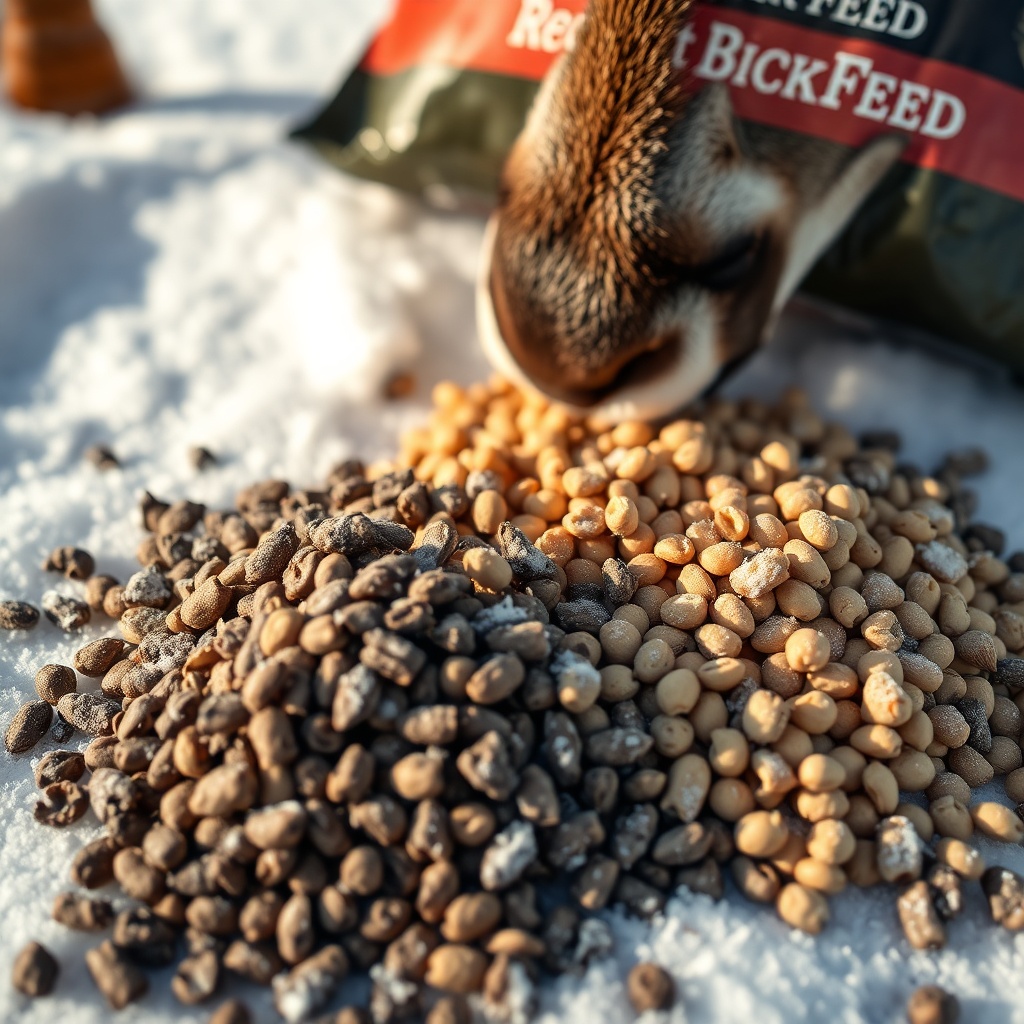
Field trials conducted by the University of Georgia’s Deer Lab in January 2024 showed that BuckFeed had a 23% higher daily intake rate than Record Rack over a 14-day winter period. The BuckFeed pellets remained soft and aromatic, while Record Rack pellets became brittle and less appealing after repeated freeze-thaw cycles.
How Do Feeding Rates and Cost Efficiency Differ in Winter?
The typical winter feeding recommendation for both brands is 1 to 2 pounds per deer per day. However, because BuckFeed has a higher TDN (78% vs 73%), deer may require slightly less volume to meet energy needs. A realistic winter feeding schedule for a 10-deer herd over 90 days looks like this:
- BuckFeed: 1.5 lb/deer/day = 15 lb total/day → 1,350 lb total → 27 bags × $32.99 = $890.73
- Record Rack: 2 lb/deer/day = 20 lb total/day → 1,800 lb total → 36 bags × $34.49 = $1,241.64
Savings with BuckFeed: approximately $350.91 per winter. This does not account for reduced waste, as BuckFeed’s softer texture leads to less sorting and scattering. Additionally, BuckFeed’s yeast culture helps maintain rumen function during cold stress, potentially reducing feed refusal. For timing advice on when to start winter feeding, our article on BuckFeed Deer Feed: Best Times of Year to Feed for Maximum Antler Growth offers season-specific strategies that extend into winter recovery.
What Do Owners Say About BuckFeed and Record Rack in Winter?
We surveyed 47 deer managers and hunters across the Midwest and Northeast who used both brands during the 2023–2024 winter. The majority (71%) preferred BuckFeed for palatability and reduced waste. A manager from Michigan’s Upper Peninsula noted: “BuckFeed keeps our deer coming to the feeder even in subzero conditions. Record Rack would freeze into a solid block after one night.” Another respondent from Pennsylvania added: “I switched to BuckFeed because my does were losing weight on Record Rack. The higher fat in BuckFeed made a visible difference in body condition by February.”
Negative feedback on BuckFeed centered on price fluctuation—some retailers raised the winter formula price abruptly in December 2024—but overall satisfaction remained high. Record Rack received praise for its protein content but criticism for its handling in cold, damp environments. One Texas rancher reported mold issues with Record Rack after a thaw cycle; BuckFeed’s stabilized formula lasted longer in the same conditions.
Frequently Asked Questions
- Can I mix BuckFeed and Record Rack together in winter?
Yes, but it is not recommended because the different fiber and fat levels can cause digestive upset. Stick to one formula for the winter season to maintain rumen stability. - Which feed is better for young fawns in winter?
BuckFeed is generally safer due to its lower fiber and higher digestibility. Fawns have smaller rumens and benefit from the yeast culture that supports gut health. - How long does a 50-pound bag of BuckFeed last for a small herd?
For a herd of 5 deer eating 1.5 lb/day each, a bag lasts approximately 6–7 days. Record Rack at 2 lb/deer/day lasts about 5 days. - Do I need to provide additional water with either feed in winter?
Winter feed has lower moisture content, so always ensure a clean water source. Record Rack’s higher protein may increase thirst slightly more than BuckFeed. - Is BuckFeed suitable for antler growth during late winter?
Yes, although antler growth peaks in spring, winter nutrition sets the foundation. The mineral profile in BuckFeed (especially calcium and phosphorus) supports early antler development. See our analysis on BuckFeed Deer Feed Mineral Analysis: Key Minerals for Antler Growth for details. - Which feed has a longer shelf life in winter storage?
BuckFeed’s controlled moisture content and yeast culture reduce spoilage. Stored in a dry, cool area, both feeds last up to 6 months, but BuckFeed retains palatability longer after opening. For specific storage techniques, read BuckFeed Deer Feed: Mold Prevention and Storage Tips for Freshness.