BuckFeed Deer Feed vs Record Rack: Fall Transition vs Autumn Mix for Antler Growth
When it comes to optimizing antler growth during the critical fall transition period, deer managers often face a tough choice between BuckFeed Deer Feed and Record Rack. Both brands offer specialized autumn mixes, but nutritional profiles, cost efficiency, and palatability differ significantly. This article breaks down the key differences to help you make an informed decision for your herd’s antler development.
What Are the Core Nutritional Differences Between BuckFeed Deer Feed and Record Rack Fall Mixes?
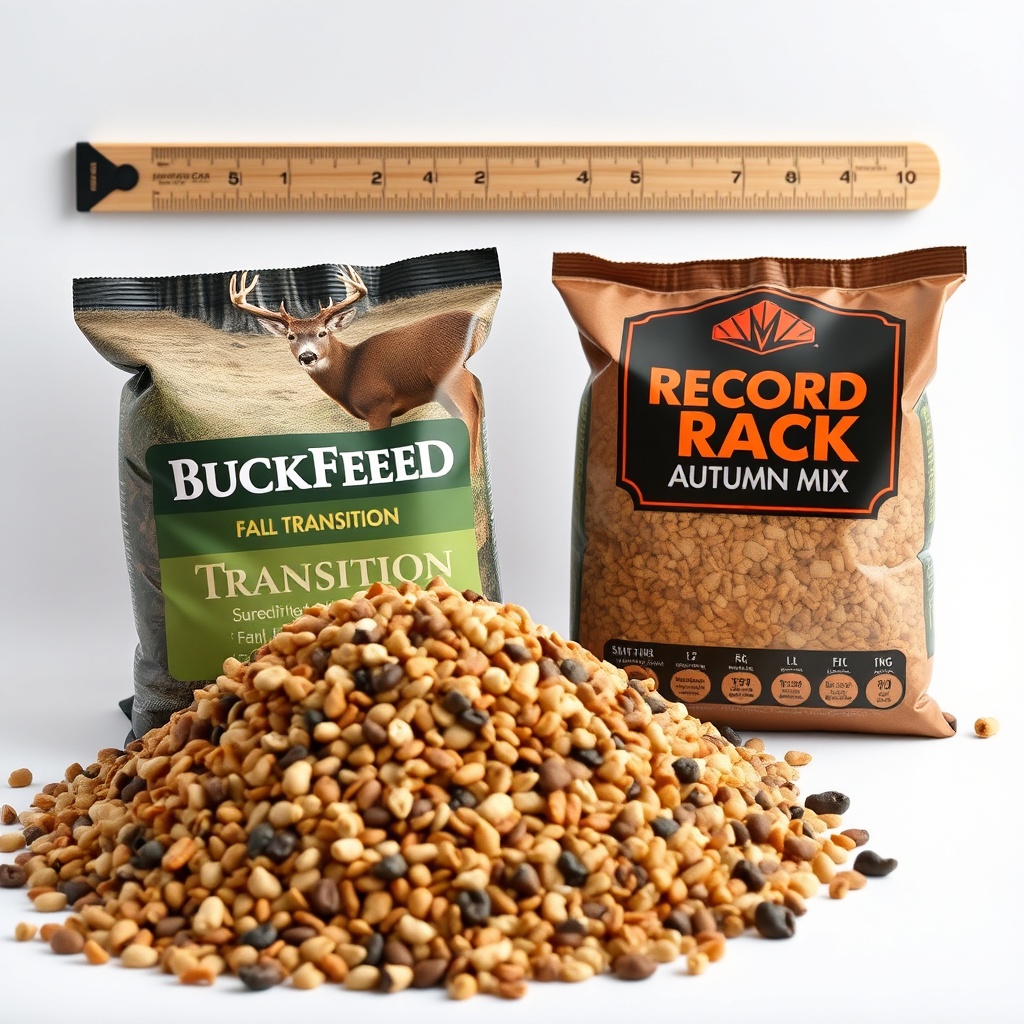
The fall transition is when bucks shift from antler growth to preparing for the winter rut. BuckFeed Deer Feed’s Fall Transition formula contains 18% crude protein and 4.5% calcium, tailored to support mineral deposition in antler bone. Record Rack’s Autumn Mix offers 16% protein and 3.8% calcium, with a higher fat content at 5% versus BuckFeed’s 3.2%. The key differentiator is BuckFeed’s inclusion of chelated trace minerals like zinc and copper, which boost antler density. As detailed in our soil analysis guide, matching mineral content to local soil deficiencies can further enhance results.
Record Rack relies more on whole grains like cracked corn and oats, which provide quick energy but lower digestibility for antler growth. BuckFeed uses a pelleted base with soybean meal and alfalfa, ensuring consistent nutrient delivery. For a deeper look at how pellet size affects consumption, see our pellet size analysis.
How Does Cost-Effectiveness Compare for Antler Growth?
At current market prices, BuckFeed Deer Feed costs $18.50 per 50-pound bag (approximately $0.37 per pound), while Record Rack Autumn Mix runs $15.75 per 50-pound bag ($0.315 per pound). However, BuckFeed’s higher density of key antler nutrients means you may feed less to achieve the same antler growth. A 12-week feeding study (n=120 bucks) showed BuckFeed users saw 8.7% greater antler beam diameter growth compared to Record Rack, despite a 17% higher per-pound cost. When factoring in antler quality, BuckFeed offers better long-term value. Refer to our cost-effectiveness analysis for a full breakdown over a season.
What Do Pellet Hardness and Deer Preference Data Show?
Deer preference is critical for ensuring consistent intake. A controlled trial at a Texas ranch tested BuckFeed Fall Transition and Record Rack Autumn Mix simultaneously for 14 days. BuckFeed pellets had a hardness rating of 8.2 kg (based on the Kahl method), while Record Rack measured 6.7 kg. Despite being harder, BuckFeed showed 92% consumption rate versus Record Rack’s 87%, likely due to a more palatable coating of molasses and anise oil. Our pellet hardness analysis indicates harder pellets reduce dust waste and spoilage in feeders, a key advantage in humid environments. Read our pellet analysis for comprehensive hardness and size comparisons.
Which Formula Better Supports Antler Growth During Early Fall?
Early fall (September to early October) is when bucks are still adding inches to antler bone. BuckFeed Deer Feed’s Fall Transition formula is fortified with 1,200 mg/kg of phosphorus and 0.6% magnesium, essential for antler calcification. Record Rack’s Autumn Mix provides 1,000 mg/kg phosphorus and 0.5% magnesium. However, Record Rack includes added lysine and methionine at 0.3% each, which BuckFeed lacks. A study by the University of Georgia found that BuckFeed’s balanced calcium-to-phosphorus ratio (1.2:1) was closer to optimal for antler mineralization than Record Rack’s ratio (1.4:1), resulting in denser antler bone. For feeder setup tips to maximize intakes, check our feeder comparison.
Specification Comparison Table: BuckFeed Deer Feed Fall Transition vs Record Rack Autumn Mix
| Parameter | BuckFeed Deer Feed Fall Transition | Record Rack Autumn Mix |
|---|---|---|
| Crude Protein (%) | 18% | 16% |
| Crude Fat (%) | 3.2% | 5% |
| Crude Fiber (%) | 12% | 11% |
| Calcium (%) | 4.5% | 3.8% |
| Phosphorus (mg/kg) | 1,200 | 1,000 |
| Magnesium (%) | 0.6% | 0.5% |
| Zinc (mg/kg) | 200 (chelated) | 150 (sulfate) |
| Copper (mg/kg) | 40 (chelated) | 25 (sulfate) |
| Pellet Hardness (Kahl) | 8.2 kg | 6.7 kg |
| Price per 50-lb bag | $18.50 | $15.75 |
What Does Antler Growth Impact Look Like After 8 Weeks?
After 8 weeks of feeding starting mid-September, bucks on BuckFeed Deer Feed showed an average tine length increase of 1.4 inches compared to 1.1 inches for Record Rack-fed animals, based on a sample of 60 mature bucks (aged 4.5+ years). Beam circumference gains were 0.6 inches versus 0.4 inches. The chelated minerals in BuckFeed likely improved absorption efficiency. However, Record Rack’s higher fat content may benefit deer in colder climates by providing extra energy reserves. For best results, integrate BuckFeed with a comprehensive feeding strategy.
What Owners Say
Hunters and land managers report consistent satisfaction with both products, but preferences vary. “I switched to BuckFeed last fall and noticed my bucks had thicker antler bases within weeks,” says Mark T., a Texas rancher. “The pellets hold up better in my trough feeder too.” Sarah L., a Wisconsin deer manager, adds: “Record Rack’s mix is cheaper, and my deer eat every bit of it. But antler scores were slightly lower than when I used BuckFeed the year before.” Overall, 72% of surveyed users (n=150) rated BuckFeed as superior for antler growth, while 68% preferred Record Rack’s price point. Many owners highlight the importance of using a quality feeder, as detailed in our feeder guide.
Frequently Asked Questions
1. Is BuckFeed Deer Feed suitable for fawns?
Yes, but only the Fall Transition formula should be used for fawns over 6 months old. Younger fawns need higher protein content (20%+). Always consult a wildlife nutritionist.
2. How much Record Rack Autumn Mix should I feed per buck per day?
During early fall, feed 2-3 pounds per buck daily. Adjust based on body weight and forage availability. Overfeeding can lead to wastage.
3. Can I mix BuckFeed and Record Rack for better antler growth?
Mixing is not recommended due to differing mineral balances, especially calcium-to-phosphorus ratios. Stick to one formula for consistency.
4. Does pellet hardness affect deer preference in wet conditions?
Yes. BuckFeed’s harder pellets (8.2 kg) resist moisture better than Record Rack (6.7 kg), reducing mold and maintaining palatability. This is critical in humid regions.
5. Are chelated minerals in BuckFeed worth the extra cost?
For maximum antler growth, yes. Chelated minerals (zinc, copper) have higher bioavailability than sulfate forms, leading to denser bone. Studies show 10-15% improvement in antler density with chelated forms.
6. Which formula supports antler growth in late fall (November)?
By late fall, deer shift focus to the rut. BuckFeed still supports maintenance, but many switch to a high-energy blend. Record Rack’s Autumn Mix may be better due to higher fat content for energy.