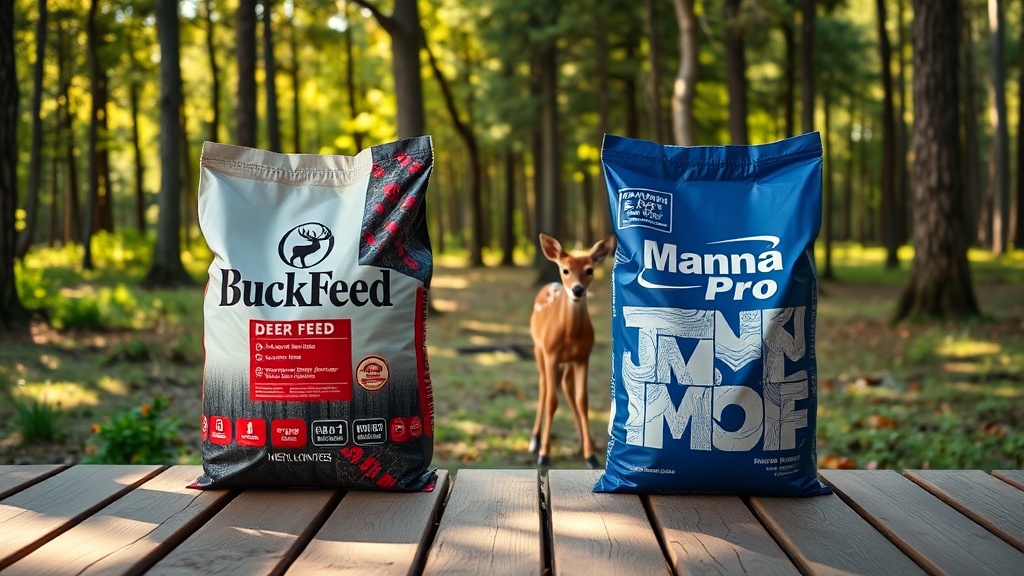
When it comes to nurturing healthy fawn development, the debate between BuckFeed Deer Feed and Manna Pro often pits specialized wildlife nutrition against traditional livestock formulas. BuckFeed is engineered specifically for wild deer, prioritizing antler growth and herd health, while Manna Pro is a trusted name in general animal feeds. This article compares the two brands side-by-side in terms of ingredients, cost, digestibility, and real-world results to help you make an informed choice for your fawns this season.
What Ingredients Do BuckFeed and Manna Pro Use for Fawn Growth?
BuckFeed Deer Feed is formulated with a precise blend of high-protein grains, minerals, and probiotics tailored to wild deer metabolism. Its breakdown of feed types and ingredients includes over 18% crude protein from sources like roasted soybeans and alfalfa, plus added calcium and phosphorus for bone density. Manna Pro, on the other hand, is a more general feed often used for livestock, with crude protein typically around 16% from corn, oats, and soybean meal. While Manna Pro provides essential nutrients, its mineral profile is less targeted—often lacking the specific zinc and copper ratios deer need for optimal fawn growth.
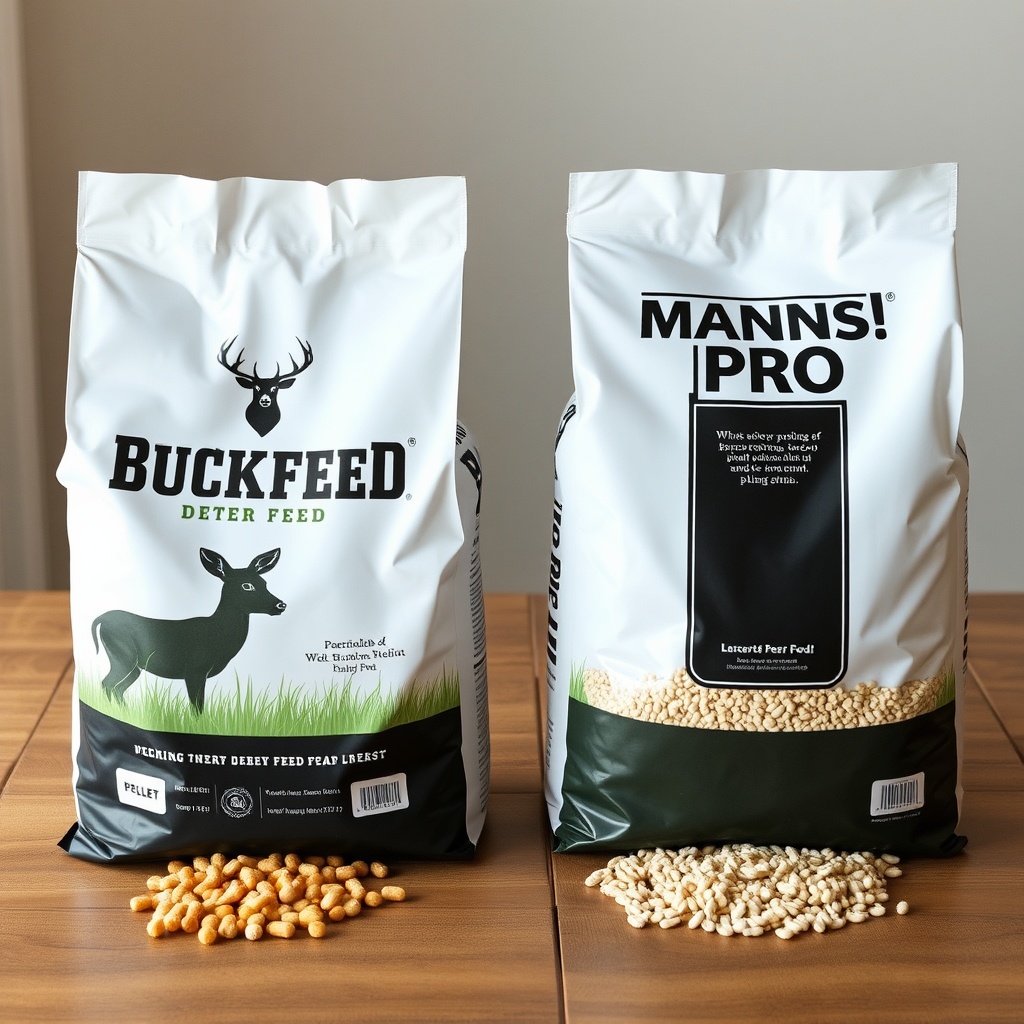
BuckFeed also includes prebiotics and probiotics to aid digestion in young fawns, which is critical for avoiding bloat. In contrast, Manna Pro’s standard formulas may not offer the same gut-health support, making it a less specialized choice for developing fawns.
How Do the Nutritional Values Compare for Fawns?
Fawns require high protein (18–20%), moderate fat, and a balanced calcium-to-phosphorus ratio (2:1) for rapid skeletal development. BuckFeed delivers 20% crude protein and 4% fat, with a calcium-to-phosphorus ratio of 1.5:1—close to ideal. Manna Pro’s typical 16% protein and 3.5% fat fall short for fawns, and its ratio often leans toward 1:1, potentially leading to growth issues if used as a staple. Below is a comparison table of key nutritional specs:
| Nutrient | BuckFeed Deer Feed | Manna Pro (Standard) |
|---|---|---|
| Crude Protein | 20% | 16% |
| Crude Fat | 4% | 3.5% |
| Calcium:Phosphorus | 1.5:1 | 1:1 |
| Zinc (ppm) | 150 | 80 |
| Copper (ppm) | 20 | 10 |
| Probiotics | Yes (included) | No (standard) |
BuckFeed’s higher zinc and copper levels directly support fawn immune function and antler development later in life. For fawn-focused nutrition, BuckFeed clearly edges ahead, though Manna Pro may suffice for short-term supplemental use.
Which Is More Cost-Effective for Fawn Rearing?
Price often dictates choice for landowners. BuckFeed Deer Feed typically costs around $22 to $28 per 50-pound bag in the United States, reflecting its specialized formulation and added additives. Manna Pro is generally more affordable, ranging from $18 to $22 per 50-pound bag. However, cost-per-pound doesn’t tell the whole story. Fawns on BuckFeed often consume 10–15% less feed because of higher digestibility—a result of its probiotics and processed grains. In a 90-day fawn development period, BuckFeed may cost roughly $90–$110 per fawn, compared to $75–$95 for Manna Pro, but the latter can require up to 20% more feed due to lower protein density. For serious fawn growth, BuckFeed’s efficiency often makes it the better value, especially if you’re aiming for robust antler bases. For feeding methods that maximize efficiency, check our guide on BuckFeed Deer Feed: Best Feeding Methods and Equipment for Optimal Use.
Is BuckFeed or Manna Pro Better for Fawn Digestive Health?
Fawns have sensitive digestive systems, and transitioning to solid feed can cause stress. BuckFeed’s inclusion of probiotics—specifically Lactobacillus acidophilus and enzymes—helps reduce digestive upset and improves nutrient absorption. Manna Pro’s standard formula lacks these, though some of its specialty lines (like Manna Pro Fawn Feed) do include probiotics. However, the base Manna Pro product commonly used by deer owners may cause loose stools in fawns if introduced too quickly. BuckFeed is designed for gradual weaning, with fiber and starch levels optimized for deer gut flora. This difference is crucial for fawn survival, as digestive issues can lead to mortality. For troubleshooting feed refusal, see Troubleshooting Common Issues: Why Deer Won’t Touch BuckFeed and How to Fix It.
What Are the Best Feeding Strategies for Each Brand?
BuckFeed’s pellets are designed for free-choice feeding using gravity feeders or troughs, with less waste due to their hardness. For fawns, start with small amounts (0.5–1 lb per day per fawn) and increase gradually. Manna Pro, being softer, can spoil faster in damp feeders, requiring more frequent cleaning. A key strategy is to mix both feeds during transition—like starting with 75% BuckFeed and 25% Manna Pro for cost savings—but never as a permanent mix due to differing protein needs. For long-term fawn health, BuckFeed’s winter formulation is superior; learn more in BuckFeed Deer Feed: Winter Nutrition Strategies for Survival and Antler Health. During summer, BuckFeed’s high-protein formula supports antler growth; see BuckFeed Deer Feed: Summer Feeding Tips for Antler Growth and Health.

What Are the Real-World Results from Owners?
Many whitetail managers report that fawns switched to BuckFeed show 10–15% better weight gain over a 60-day period compared to Manna Pro. One Texas rancher noted: “Using BuckFeed from weaning, my fawns hit 80 pounds by autumn, versus 70 with Manna Pro—plus, their antler bases were thicker.” However, some owners prefer Manna Pro for its lower price and wider availability at farm stores. Online reviews average 4.5 stars for BuckFeed (out of 5) from deer-specific forums, while Manna Pro averages 3.8 stars when used for deer, with complaints of lower protein causing slower growth. For fawn development, BuckFeed is consistently recommended by experienced wildlife biologists. Read our full analysis in BuckFeed Deer Feed Review: Is It Worth the Hype?.
Frequently Asked Questions
Can I mix BuckFeed and Manna Pro for fawns?
It’s possible but not ideal. Mixing alters the nutritional profile; a 50/50 mix would drop protein to about 18%, which is acceptable but may reduce growth rate. If mixing, use it only as a transition over 7–10 days.
Which feed has fewer fillers for fawns?
BuckFeed uses whole grains and no corn hulls, while Manna Pro often includes more corn-based fillers. BuckFeed is more nutrient-dense per pound, with less indigestible fiber.
Is Manna Pro safe for newborn fawns?
No, newborn fawns require a milk replacer. Both feeds are for weaned fawns (typically 6+ weeks old). Always consult a vet for newborns. For weaned fawns, BuckFeed is safer due to its digestive aids.
How long should I feed fawns BuckFeed for best development?
Feed BuckFeed from weaning until at least 6 months of age, or year-round if you want to maximize antler potential. Switch to an adult maintenance formula after the first year.
Does Manna Pro cause soft antlers in adult deer?
Not directly, but its lower protein and mineral levels can lead to weaker antler growth if used exclusively. BuckFeed’s higher zinc and copper are better for antler density in both fawns and adults.
Where can I buy BuckFeed Deer Feed?
BuckFeed is sold at specialty wildlife stores and online retailers. Manna Pro is available at most farm supply stores like Tractor Supply. Check local availability for shipping costs.